Supreme Court: NCTE may require annual Performance Appraisal Reports from teacher education institutions
Supreme Court of India · The National Council for Teachers Education v. Association of NCTE Approved Colleges Trust and Ors. · Decided on 03.09.2026
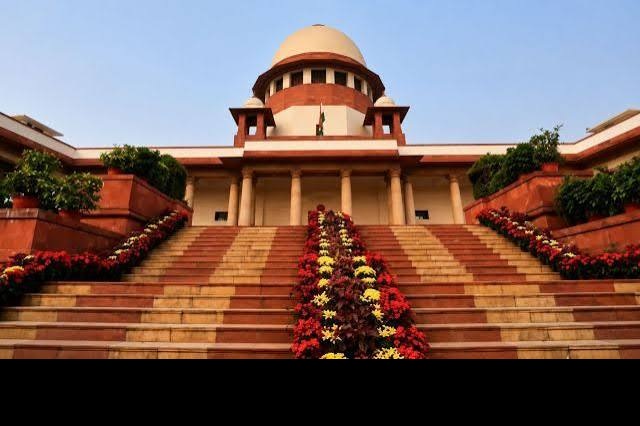
The Supreme Court has held that NCTE has authority to call for an annual Performance Appraisal Report from teacher education institutions. The Court also recorded that teacher education institutions are duty bearers in securing quality education.
The Supreme Court of India, by its judgment dated 03.09.2026, has held that the National Council for Teacher Education (NCTE) and its Executive Committee have clear power to require teacher education institutions to submit an annual Performance Appraisal Report (PAR). The payment charged with the report is a valid process fee. The Court set aside the Delhi High Court judgment that had struck down the requirement.
Background
On 22.09.2019 the Member Secretary of the NCTE Executive Committee issued a Public Notice making it mandatory for all teacher education institutions to submit the PAR online for the academic year 2018 to 2019. The notice fixed a payment of Rs.5,000 per institution for Central and State Government institutions and Rs.15,000 per institution for all others, with a filing window from 23.09.2019 to 31.12.2019. It stated that non-submission would attract action under Section 17(1) of the NCTE Act, 1993.
The notice followed a decision of the NCTE General Body at its 48th meeting on 05.02.2019. The Council had earlier approved annual renewal of recognition, but that plan became entangled in litigation before several High Courts. The Council therefore chose to substitute the PAR for annual renewal and authorised NCTE to proceed through a proforma to be developed by the NCTE itself.
Several institutions challenged the notice. The learned Single Judge dismissed the writ petition, but the Division Bench of the Delhi High Court (LPA No. 190 of 2021, judgment dated 13.03.2023) quashed the notice. It found nothing on record to show that the proforma had been approved by the Council, or that the function under Section 12(k) had been delegated to the Member Secretary under Section 27.
What the Supreme Court held
The Court disagreed with the High Court and allowed the appeal. Its main findings are these.
The power to call for a PAR is traceable to Section 12(k) of the NCTE Act, which allows the Council to evolve a suitable performance appraisal system and a mechanism for enforcing accountability on recognised institutions.
The Executive Committee is the body that actually discharges the functions of the Council. The Member Secretary acted within authority in issuing the notice to implement the Council’s decision of 05.02.2019. Even in the absence of a specific empowerment, a regulatory measure of this kind is incidental and ancillary to the duties of a regulator.
The payment required with the PAR is in the nature of a process fee, which is again an incidental and ancillary power of the regulator.
Courts must not take a technical or pedantic view of the actions of regulators. Constitutional courts have a positive duty to see that regulators exercise their powers effectively, efficiently and with accountability.
The Court also recorded that teacher education institutions are duty bearers in securing quality education, and that NCTE carries among the highest duties of all such bodies.
What institutions should do
- Treat the annual PAR as a condition of recognition. Check the NCTE portal for the current filing window and the payment applicable to the institution, and file within time.
- Keep the annual statement of accounts, duly audited by a Chartered Accountant, ready each year, since the notice made the same part of the PAR.
- Keep faculty, infrastructure, financial and course records consistent with the recognition norms, so that the report filed matches the record held by the institution.
The judgment strengthens the hand of statutory regulators in matters of accountability and reporting. Teacher education institutions are well advised to treat the annual PAR as a routine compliance item and to build it into the institutional compliance calendar.
Read the Judgment
Source: Supreme Court of India
Need advice on this?
EduLegaL, A Division of RSB LegaL. Write to us at mail@edulegal.in or use the contact page.
This page gives general information only and is not legal advice. Please read the original text before acting.